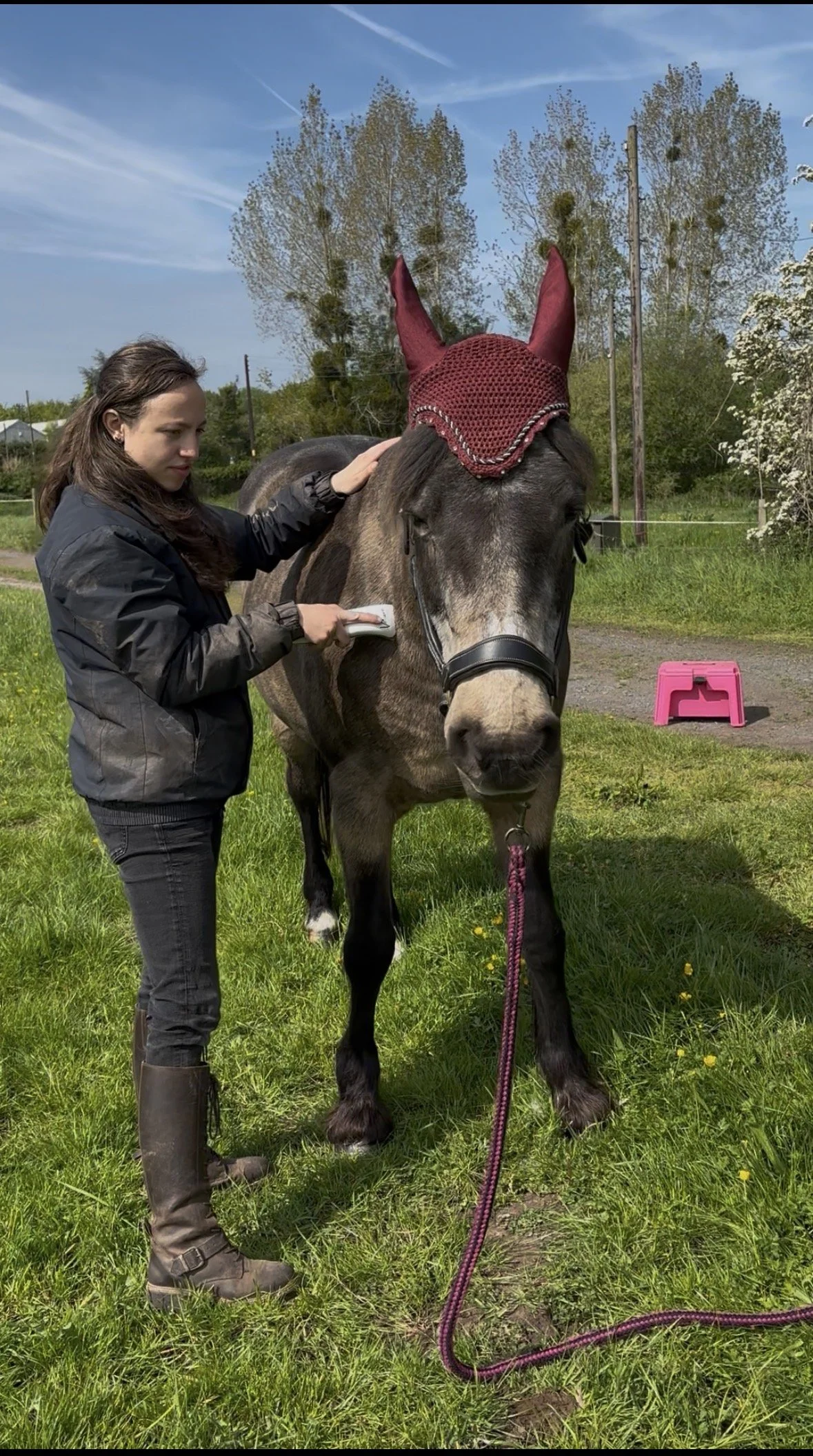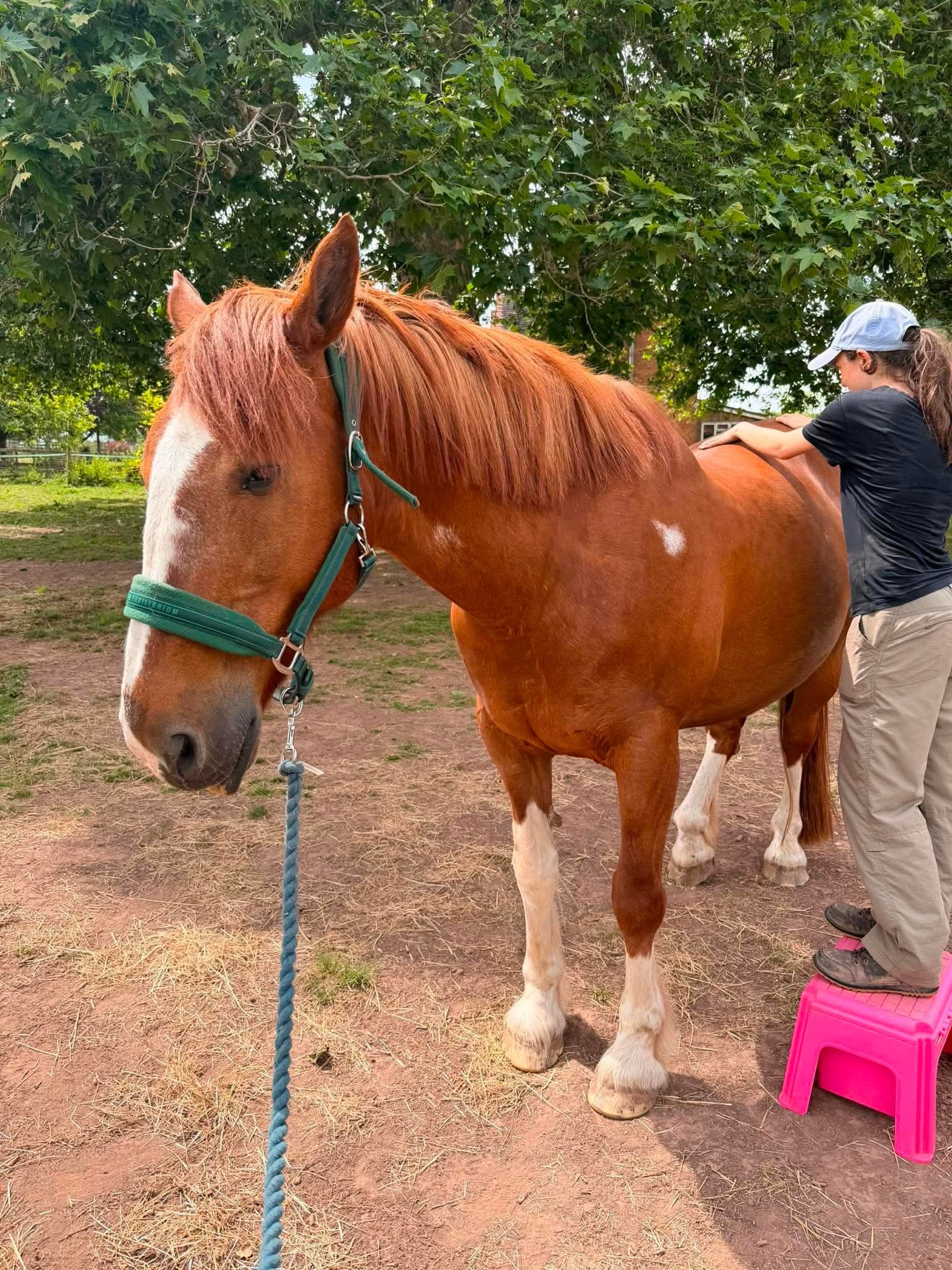
Hi, I’m Cecilia Gardner.
Horses have been part of my life for as long as I can remember. I grew up surrounded by these incredible animals, riding, caring for them, and developing a deep love and understanding of them long before I ever thought of turning that passion into a career.
After years of being around horses in every capacity – from pony-mad childhood to competing and caring for my own – I decided to train professionally so I could give back to the animals that have given me so much. Now fully qualified in equine sports massage, I combine hands-on lifetime experience with specialist knowledge of anatomy, biomechanics, and musculoskeletal health to help horses feel and move at their very best.
Whether your horse is a happy hacker, a competition partner, or enjoying a well-earned retirement, my tailored treatments release tension, improve flexibility, support recovery, and reduce the risk of injury – all delivered with the calm, trusting approach that only comes from a lifetime spent with horses.
Get in touch today – I’d love to help your horse feel as good as they deserve to.
My Approach
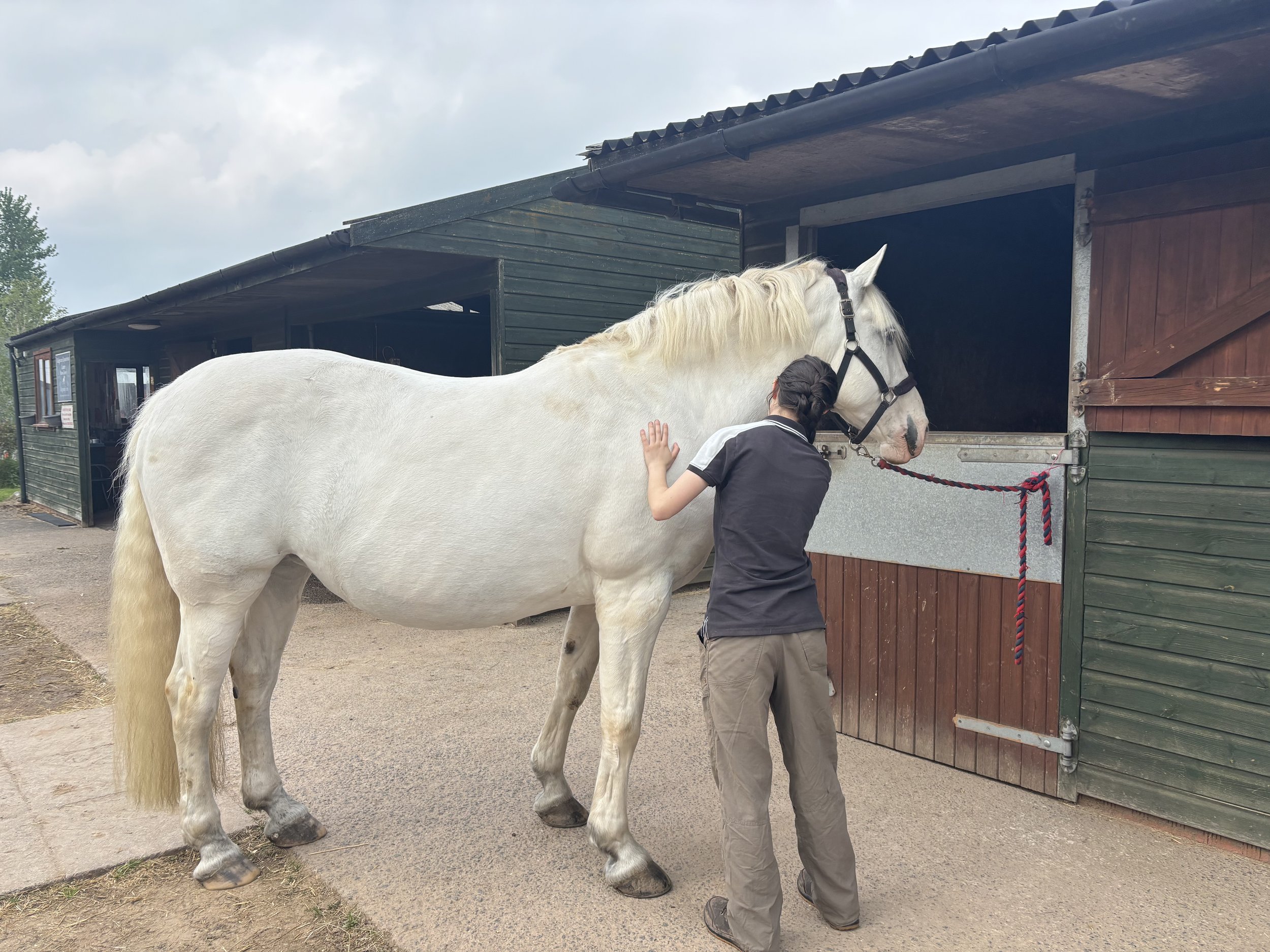
Massage techniques and benefits
Therapists use a variety of strokes including but not limited to, effleurage (long, gliding strokes), petrissage (kneading), percussion and friction to improve circulation, release muscle tension and promote lymphatic drainage. By addressing knots, adhesions caused by training and conformational issues, we can help prevent injuries, speed recovery from workouts and support overall musculoskeletal balance.
Massage works incredibly well when regularly integrated into the routine care for sport horses, such as dressage or eventing, however it also benefits pleasure horses and seniors. Studies have shown reduced soreness, increased range of motion and better gait symmetry post-session. While it’s not a substitute for veterinary care, regular massage can serve as a proactive tool in equine wellness programs, helping owners detect subtle issues early before they become a serious problem. Sessions last between 1hr to 1.5hrs and each horse is assessed individually.
Why choose Equine Massage
Massage therapy has been practiced for thousands of years, with the earliest known evidence dating back to 3000BCE in India where it was believed to be a sacred system of natural healing. Equine massage therapy is a specialised form of this bodywork designed to enhance the health, performance and well being of horse by manipulation of the muscles, tendons and ligaments. This hands on technique draws from principles similar to human massage, but is adapted to the horse’s anatomy.
Equine massage therapy supports holistic wellness by harmonising the physical, emotional and energetic systems, treating the animal as an integrated whole rather than isolated parts. Through intentional touch, we can release stored tension and trauma held in muscle memory, calming the nervous system and shifting the horse from fight or flight into parasympathetic mode. This facilitates the free flow of life force (energy - often linked to Qi or Prana) along fascial lines and meridians, restoring balance to the bioenergetic field.
By fostering this mind-body-energy connection and alignment, massage not only eases physical discomfort but also enhances mental clarity, trust and the subtle human-equine connection.